
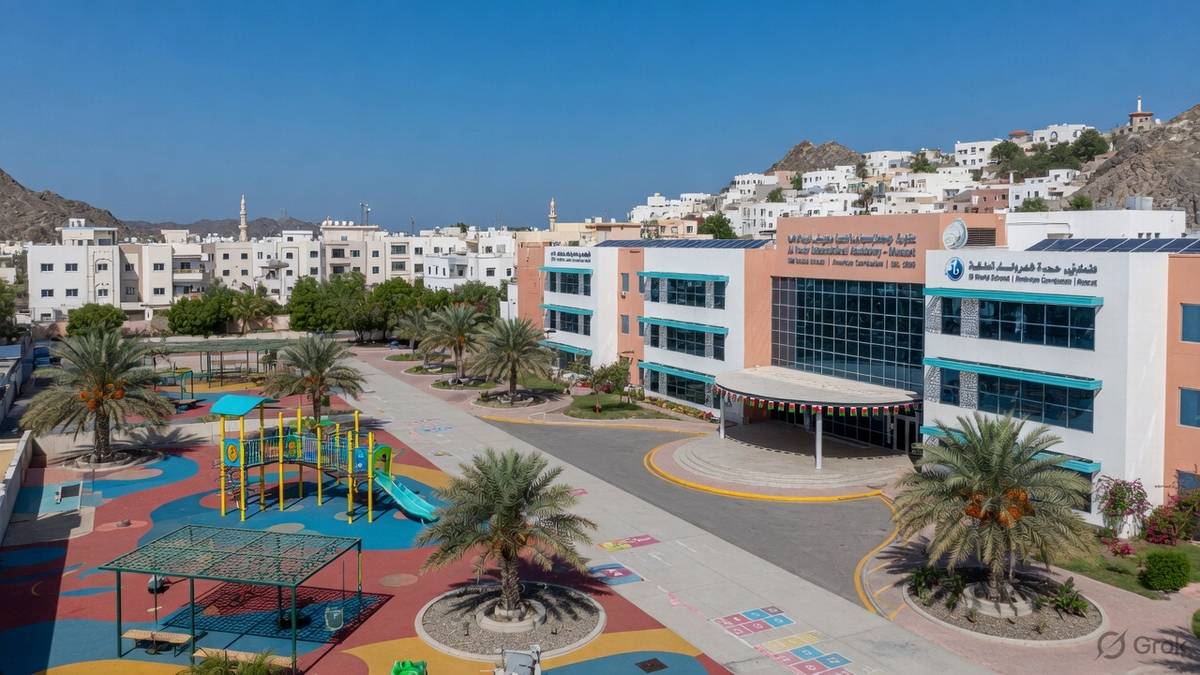
Relocating as an internationally mobile family involves far more than securing long-term legal residency. While obtaining residency provides long-term stability, establishing a smooth home life requires immediate clarity on practical family needs. Parents must navigate several critical elements:
- Selecting appropriate children's schooling
- Ensuring smooth curriculum continuity across international moves
- Evaluating school locations relative to workplace and residential neighborhoods
- Budgeting for tuition, capital fees, and ongoing educational costs
- Navigating admission timing and application windows
- Arranging reliable daily transportation and school commutes
- Reviewing extracurricular programs and sports opportunities
- Mapping out clear global university pathways for senior students
Oman Golden Visa education
Families securing long-term residency often look closely at how educational options align with their broader stay. Under the family benefits under Oman Golden Residency, primary investors can sponsor dependents. However, securing dependent residency permits and enrolling children into local schools represent distinct administrative processes.
Oman features a structured education ecosystem governed by the Ministry of Education. The system includes private and international institutions serving both Omani and non-Omani students. Under national educational frameworks, private educational institutions fall into specific categories: monolingual schools, bilingual schools, and international schools designed to deliver global curricula to expatriate and local residents.
Understanding the Education System in Oman
The Sultanate of Oman maintains a clear regulatory framework governing all educational institutions under the School Education Law promulgated by Royal Decree No. 31/2023. Understanding how schools are classified helps families select the most suitable environment for their children.
Public Education
Public schools in Oman are government-funded institutions managed directly by the Ministry of Education. Education in public schools is free for Omani citizens. While non-Omani children may be admitted under specific conditions and regulatory guidelines set by the Ministry, the core language of instruction across public schools is Arabic. The curriculum follows the national Omani educational framework, making public schools primarily tailored to native Arabic speakers seeking a national qualification pathway. Golden Visa status does not grant automatic entitlement to free public education.
Private Schools
Private schools are institutions established by individual proprietors, companies, or private organizations licensed by the Ministry of Education. These schools serve both Omani national and non-Omani expatriate students. They operate under Ministry oversight and can offer modified national curricula or specialized private programs, provided they satisfy national educational standards, including mandatory Arabic language and Islamic studies components where applicable.
International Schools
International schools are established to provide dedicated educational services primarily to foreign residents and expatriate communities. These schools are authorized to deliver foreign national or international curricula (such as British, American, IB, or CBSE frameworks). They operate under Ministerial decrees that regulate international education programs within the Sultanate.
Bilingual Schools
Bilingual schools bridge the national educational framework with international instruction. These institutions typically deliver core subjects—such as Mathematics and Sciences—in English, while social studies, Arabic language, and Islamic studies are taught in Arabic according to Ministry guidelines. They are popular among families seeking strong English language proficiency paired with cultural immersion in Omani heritage.
Choosing Between Public, Private, and International Education
| School Type | Typical Consideration | Suitable For |
|---|---|---|
| Public Schools | Arabic-medium instruction following national curriculum; free for citizens. | Omani nationals and Arabic-fluent foreign residents seeking national entry. |
| Private Schools | Locally owned with Ministry oversight; combines national standards with specialized programs. | Families seeking local cultural alignment with flexible fee structures. |
| Bilingual Schools | Dual-language model blending Arabic cultural studies with English STEM subjects. | Families want global academic standards alongside strong regional language roots. |
| International Schools | English or native-medium foreign curricula; accredited by global educational bodies. | Expatriate and mobile families prioritizing global university transition. |
International Schools in Oman for Expatriate Families
International schools serve as the primary destination for expatriate families relocating under long-term residency programs. The Ministry of Education's framework for international educational programs explicitly governs these institutions to ensure quality standards while facilitating international community needs.
Why International Schools Are Popular With Expatriate Families
Expatriate parents generally select international schools due to key structural advantages:
Curriculum Continuity: Students transitioning from another country can continue their existing educational framework (e.g., moving from a UK school to a British curriculum school in Muscat).
English-Medium Education: Lessons, assessments, and school administration operate primarily in English.
Globally Recognized Qualifications: Schools prepare students for internationally accredited examinations like IGCSEs, A-Levels, APs, or the IB Diploma.
University Mobility: Qualifications earned facilitate direct application to top-tier universities worldwide.
Multicultural Environment: Student bodies comprise diverse global student backgrounds, supporting cross-cultural adaptation.
International School Availability
Educational institutions offering international curricula are heavily concentrated around major urban centers and commercial hubs. The vast majority of top-tier accredited international schools operate within the Capital Governorate (Muscat), with smaller clusters in regional industrial centers like Salalah and Sohar. Parents should evaluate school availability in parallel with residential searches.
School Availability and Waiting Lists
Admission to leading international schools in Oman is competitive. Popular institutions often operate waiting lists for specific year groups—particularly early childhood years and senior secondary grades. Factors affecting seat availability include:
Year-Group Capacity: Class size caps enforced by accreditation bodies or Ministry guidelines.
Admission Timing: Application deadlines for the autumn academic term typically peak months in advance.
Sibling Priority: Schools frequently prioritize siblings of current students.
Relocating families are advised to initiate school contact and submit initial inquiry applications as early as possible in the move planning stage.
International Curriculums Available in Oman
Choosing the right educational framework depends on your child's past academic background and long-term university goals.
British Curriculum
Follows the Early Years Foundation Stage (EYFS) through to the English National Curriculum.
Key Stages: Students sit for International General Certificate of Secondary Education (IGCSE) examinations at age 16 (Grade 10 / Year 11) followed by Advanced Level (A-Level) qualifications at age 18 (Grade 12 / Year 13).
University Pathways: Highly regarded by UK, European, Commonwealth, and North American universities.
Transition: Ideal for students moving to or from the UK or British international schools globally.
American Curriculum
Based on standards-based educational frameworks from the United States (such as Common Core and Next Generation Science Standards).
Structure: Students progress through high school earning course credits toward a US High School Diploma. Many American schools offer Advanced Placement (AP) courses for college-level credit.
University Applications: Standardized assessments like the SAT or ACT, combined with Grade Point Averages (GPA) and AP scores, streamline entry into US and Canadian higher education.
International Baccalaureate (IB)
Focuses on holistic, inquiry-based learning across three main continuum programs: the Primary Years Programme (PYP), Middle Years Programme (MYP), and Diploma Programme (DP).
IB Diploma: The two-year DP (Grades 11–12) requires six subject groups, Theory of Knowledge (TOK), Creativity, Activity, Service (CAS), and an Extended Essay.
Workload: Known for rigorous academic demands, making it well suited for self-directed students seeking international university entry.
Indian / CBSE Curriculum
Follows the Central Board of Secondary Education (CBSE) framework set by the Indian government.
Structure: Leads to the All India Secondary School Examination (Grade 10) and All India Senior School Certificate Examination (Grade 12).
Suitability: Designed for Indian expatriate families planning for higher education entry in India or technical/professional institutes globally.
Other Curricula
Oman hosts community-specific international institutions delivering national curricula for foreign populations. These include French (baccalauréat framework), Pakistani, Filipino, Sri Lankan, and Bangladeshi community schools. These institutions ensure academic alignment for families anticipating a return to their home country system.
Curriculum Comparison Summary
| Curriculum | Common Qualification | Best Considered by Families Seeking |
|---|---|---|
| British | IGCSE A-Levels | Subject specialization and direct admission to UK/Commonwealth universities. |
| American | High School Diploma + AP Courses | Broad subject choice, continuous GPA evaluation, and US college pathways. |
| IB | IB Diploma (45-point scale) | Holistic inquiry-based education recognized by global universities. |
| CBSE | AISSCE (Grade 12 Board Exams) | Direct alignment with Indian higher education entry requirements. |
Oman School Fees 2026 - How Much Should Families Budget
School tuition in Oman varies across a wide price spectrum based on school ownership, facility standard, accreditation, year group, and curriculum.
Fee structures published directly by individual institutions illustrate this range. For instance, published fees for ABA Oman International School (an IB World School) range from OMR 3,790 for early family class programs up to OMR 10,210 annually for Grades 11–12. Community-based international schools, such as CBSE institutions, generally sit at lower cost points.
Parental budgeting must account for several fee components beyond base tuition:
Tuition Fees: Standard annual cost covering classroom instruction, charged per term or semester.
Registration Fees: One-time charges levied upon formal enrolment acceptance.
Application Fees: Non-refundable fees required to submit an application and undertake entry testing.
Capital / Development Fees: One-off or annual contributions allocated toward campus infrastructure development.
Transport: Monthly or termly fees for school bus transportation services.
Uniforms: Mandatory dress kits purchased directly or via approved vendors.
Books and Devices: Learning material fees, digital text subscriptions, or personal laptop/tablet requirements.
Examination Fees: External board fees charged in senior years (e.g., IGCSE, A-Level, IB Diploma, or AP exam fees).
Trips and Extracurricular Activities: Additional charges for off-campus excursions, overnight visits, or specialized sports clubs.
How to Budget for Education in Oman
To avoid budget surprises, families relocating under an Oman Golden Residency permit should build a comprehensive annual educational financial model.
Illustrative Annual Education Budget Model
| Education Expense | Frequency | Budget Consideration |
|---|---|---|
| Tuition Fees | Semester / Annual | Base academic delivery; increases progressively in secondary grades. |
| Application & Registration | One-time upon entry | Non-refundable processing costs and seat confirmation deposits. |
| Capital Infrastructure Fee | One-time / First year | Levied by select top-tier independent international campuses. |
| School Bus Transport | Termly / Annual | Varies according to geographic distance from campus. |
| Laptops / Tablets | Annual / Every 3 Years | Mandatory Bring-Your-Own-Device (BYOD) hardware policies in middle/high school. |
| External Board Exams | Per exam sitting | Applicable for Grades 10–12 (IB, IGCSE, A-Levels, AP). |
| Extracurricular Activities | Termly | After-school sports coaching, music instruction, and local field trips. |
Note: Figures, fee types, and structures vary by institution. Always consult official fee schedules provided directly by prospective schools.
School Admissions in Oman for Golden Visa Families
When Should Families Start Applying?
Application schedules vary across institutions, but international schools typically open registration windows 6 to 9 months prior to the start of the academic year (which generally begins in late August or early September). Families moving mid-year must confirm whether target schools accommodate rolling mid-term admissions.
Admission Requirements
While individual admissions policies differ, expatriate families applying for school seats are generally asked to provide:
Child’s valid passport and Omani Resident Card (or copy of parent's Golden Residency permit during initial processing)
- Sponsor/Parent identification and civil residency documents
- Official, attested report cards from the child's previous two academic years
- Formal Transfer Certificate (TC) from the current school
- Child's birth certificate and complete immunization/medical records
- Passport-sized photographs meeting Ministry standards
Current Official Guideline Example: For early primary entry, Ministry of Education registration notices for Grade 1 students in private schools require non-Omani children and their guardians to hold valid Oman residence cards as part of the formal enrolment verification.
Assessment and Placement
Most international private schools evaluate prospective students through:
Academic Assessments: Written or computer-based testing in English and Mathematics.
English Language Proficiency: Evaluation to determine if English as an Additional Language (EAL) support is required.
Age-Grade Placement Cut-offs: Strict adherence to age-cut-off dates defined by Ministry regulations or accreditation bodies.
Student Interviews: Informal or structured conversations to assess academic readiness and behavior.
Transfer From an Overseas School
When transferring from abroad, academic records often require attestation (apostille or certification from the Ministry of Foreign Affairs in the country of origin and the Omani Embassy) to ensure official recognition by Omani education authorities.
Where Should Families Look for Schools in Oman?
The availability of international education pathways varies across the Sultanate's governorates.
Muscat
The capital city hosts the largest selection of international, private, and bilingual education options in the country. Key residential clusters like Al Qurum, Madinat Al Sultan Qaboos, Al Mouj, and Al Khoudh offer easy access to major campuses.
Salalah
Located in the southern Dhofar Governorate, Salalah features a selection of private and international institutions—primarily serving community-based curricula alongside select global options catering to industrial and tourism sector expatriate families.
Sohar
Situated along the northern coast in Al Batinah North, Sohar has international and private options designed to serve families attached to the industrial port, free zone, and surrounding logistics operations.
Other Cities and Governorates
Outside major municipal areas, educational options consist mostly of local public schools or smaller private institutions. Families planning long-term residency should ensure their chosen residential location aligns with their schooling preferences.
School Location, Housing, and Daily Commute
A common relocation oversight is selecting residential property without accounting for school transportation dynamics. Morning peak-hour traffic around major school districts in Muscat can add significant travel time.
Key considerations when coordinating home and school locations include:
Peak Traffic Patterns: Mapping routes between home, school, and work during peak drop-off times (7:00 AM – 8:00 AM).
Bus Services: Confirming if target schools operate bus transport to your specific neighborhood.
Multiple School Pick-ups: Factoring in logistics if siblings attend different campuses across town.
Extracurricular Proximity: Minimizing travel distance for after-school sports and activities.
Higher Education in Oman
Planning secondary education works best when aligned with long-term university pathways. Oman features an expanding higher education network overseen by the Ministry of Higher Education, Research and Innovation.
Universities and Higher Education Institutions
Public Universities: Sultan Qaboos University (SQU) serves as the Sultanate’s premier public university, maintaining high academic standards across diverse disciplines.
Private Universities and Colleges: Institutions such as the University of Nizwa, Dhofar University, and Sohar University provide degree programs across business, engineering, and human sciences.
International Campus Partnerships: Several Omani higher education institutions collaborate directly with global universities (particularly UK and European institutions) to offer joint or dual degrees locally.
Choosing an Oman University
When evaluating local tertiary study options, families evaluate key criteria:
- Institutional accreditation by the Oman Academic Accreditation Authority (OAAA)
- Language of instruction (English vs. Arabic)
- Tuition costs and available academic scholarships
- Specific degree accreditations (e.g., engineering or medical board certifications)
- Graduate employment placement rates in regional industries
University Options for Internationally Mobile Families
For many international Golden Visa families, secondary schooling in Oman acts as a stepping stone to top global universities.
Parents should select an international curriculum that best matches their child's target university destination:
- UK Destinations: A-Levels or IB Diploma
- US/Canadian Destinations: American High School Diploma + AP courses or IB Diploma
- Indian Destinations: CBSE Board Examinations
- GCC / Global Mobility: IB Diploma or widely recognized national certificates
How Oman Golden Residency Can Affect Education Planning
Securing long-term residency through programs like the Oman Golden Visa requirements to guarantee structural stability for raising a family.
Residency Stability
Unlike short-term employment visas tied to a specific employer, long-term Golden Residency grants multi-year stability. This allows children to complete primary or secondary educational cycles without mid-term disruption caused by visa renewals or employment transitions.
School Admission Reality
Holding an Oman Golden Visa satisfies residency requirements for private school registration. However, Golden Residency status does not guarantee admission to any specific school. Admission remains under the independent authority of individual schools, subject to seat availability, entrance exam performance, and school fees.
Separate Decisions
Residency Eligibility: Granted based on investment or qualifying long-term residency criteria.
School Admission: Granted by individual schools based on academic eligibility, age matching, capacity, and tuition payment.
Education Planning for Children Before [Relocating to Oman](/blog/oman-golden-visa-living-in-oman)
[ ] 1. Determine Child's Current Grade: Map the current grade system to target school age-cut-off rules.
[ ] 2. Identify Preferred Curriculum: Decide between British, American, IB, CBSE, or bilingual models.
[ ] 3. Shortlist Target Campuses: Identify accredited institutions located near preferred residential zones.
[ ] 4. Check Seat Availability: Reach out directly to school admissions offices to confirm open seats.
[ ] 5. Request Comprehensive Fee Schedules: Request full cost breakdowns covering tuition, registration, and capital fees.
[ ] 6. Prepare Transcripts: Secure certified, translated, and attested academic transcripts.
[ ] 7. Verify Medical/Immunization Records: Ensure health records meet Omani registration standards.
[ ] 8. Review School Transport Services: Confirm route availability to avoid commuting issues.
[ ] 9. Evaluate University Progression: Verify senior-school qualifications match prospective university goals.
Questions Families Should Ask Before Choosing a School in Oman
Academic & Curriculum
Which specific international or national curriculum does the school deliver?
What global accreditations does the institution hold?
What matriculation pathways do senior graduates pursue?
Admission & Capacity
Are seat placements available for my child's year group?
What entrance examinations or interviews are mandatory?
What attestation is required for previous report cards?
Total Cost Structure
What is the schedule of tuition payments (termly or semester-based)?
Are there mandatory one-time capital, development, or enrollment charges?
What expenses are required for books, technology, exams, and uniforms?
School Life & Support
What after-school sports and extracurricular programs are available?
Does the school offer English as an Additional Language (EAL) or learning support?
What are the daily start and finish times, and is transportation provided?
Common Education Mistakes Golden Visa Families Should Avoid
Selecting a School After Securing Housing: Renting property far from target schools leads to long, difficult daily commutes.
Budgeting Only for Base Tuition: Overlooking one-time capital fees, enrollment charges, and exam costs distorts budget estimates.
Ignoring Curriculum Continuity: Switching educational systems during critical secondary years can disrupt exam preparation.
Applying Late in the Year: Delaying applications can force families onto waiting lists at top-tier schools.
Assuming Residency Guarantees School Placement: Golden Visa status provides legal residency but does not secure school seats.
Overlooking University Entry Standards: Selecting a curriculum that doesn't align with home-country university entry criteria.
Relying on Outdated Fee Estimates: Failing to review published, current-year fee tables directly from schools.
Assuming All "International" Labels Are Identical: Assuming all international schools share the same accreditation, facilities, or quality standards.
Oman Golden Visa Education Planning Checklist
How Migrate World Can Help
Migrate World assists high-net-worth investors and mobile families navigating residency-by-investment programs globally. Our advisory services focus on:
- Evaluating Oman Golden Residency investment options and requirements
- Managing long-term residency application submission and family inclusion
- Advising on family relocation logistics and documentation requirements
- Navigating residency guidelines relevant to settling in the Sultanate
Note: Migrate World specializes exclusively in residency and immigration advisory services. School evaluation, placement testing, enrollment decisions, and tuition payments must be managed directly with licensed educational institutions in Oman.
Planning an Oman Golden Visa move with your family?
[Speak to an Oman Golden Visa Advisor](https://www.omangoldenvisa.com/contact)
Frequently Asked Questions
FAQ 1: Can Golden Visa holders send their children to schools in Oman?
Yes. Children of Golden Visa holders who hold valid Omani residence documentation can enroll in private and international schools across Oman, subject to meeting individual school admission criteria.
FAQ 2: What types of schools are available in Oman for expatriates?
Expatriates can choose from private schools, bilingual institutions, and accredited international schools offering global curricula (such as British, American, IB, and CBSE frameworks).
FAQ 3: What are international schools in Oman?
International schools are educational institutions licensed to deliver foreign or international curricula to resident communities in English or other non-Arabic primary instruction languages.
FAQ 4: How much do international schools cost in Oman?
Annual tuition ranges widely from OMR 1,000–2,500 at community institutions to OMR 3,500–10,000+ at premium international schools depending on grade level and facilities.
FAQ 5: What curriculum options are available in Oman?
Major options include the British National Curriculum (IGCSE/A-Levels), American Curriculum (Diploma/AP), International Baccalaureate (PYP/MYP/DP), and Indian CBSE curriculum.
FAQ 6: Are there British schools in Oman?
Yes, Oman features accredited British international schools delivering the English National Curriculum, IGCSEs, and A-Levels.
FAQ 7: Are there American schools in Oman?
Yes, several schools offer a US standards-based curriculum leading to a High School Diploma, with Advanced Placement (AP) course options.
FAQ 8: Are there IB schools in Oman?
Yes, Oman hosts authorized IB World Schools offering Primary Years (PYP), Middle Years (MYP), and Diploma (DP) programs.
FAQ 9: Are there CBSE schools in Oman?
Yes, Indian community schools operating under the CBSE curriculum are available across major cities, including Muscat, Salalah, and Sohar.
FAQ 10: What documents are needed to enrol a child in an Oman school?
Required documents typically include passport copies, valid Omani resident permits, attested academic report cards, transfer certificates, and immunization records.
FAQ 11: Does an Oman residence permit help with school registration?
Yes. Having a valid residence permit satisfies Ministry requirements for enrolling non-Omani students in licensed private educational institutions.
FAQ 12: Does Golden Visa status guarantee school admission?
No. Golden Residency grants long-term legal residence but does not guarantee admission or reserve seats at specific private or international schools.
FAQ 13: When should expatriate families apply to schools in Oman?
Families should begin the application process 6 to 9 months ahead of the academic year start, as popular schools often maintain waiting lists.
FAQ 14: Which Oman cities have international schools?
The highest concentration is in Muscat. Regional cities like Salalah and Sohar also feature international and private schooling options.
FAQ 15: Can children transfer from an international school abroad to an Oman school?
Yes, provided academic transcripts and transfer certificates are properly attested according to Ministry of Education guidelines.
FAQ 16: Can children educated in Oman attend universities abroad?
Yes. Students graduating with internationally accredited qualifications (A-Levels, IB Diploma, AP, CBSE) can apply directly to universities globally.
FAQ 17: What universities are available in Oman?
Oman features Sultan Qaboos University (public) alongside private universities and international college partnerships offering undergraduate and postgraduate programs.
FAQ 18: What additional costs should parents budget for besides tuition?
Parents should budget for application fees, enrollment deposits, capital charges, uniforms, transportation, learning devices, and external exam fees.
FAQ 19: Is education free for Golden Visa holders in Oman?
No. Free public schooling is primarily reserved for Omani citizens. Expatriate residents, including Golden Visa holders, typically enroll in fee-paying private or international schools.
FAQ 20: How should families choose a school in Oman?
Families should evaluate school accreditation, curriculum alignment, location, total annual fees, campus facilities, and graduate university outcomes.
FAQ 21: Should families choose their home location based on school location?
Yes. Choosing housing near target schools reduces daily commute times and simplifies transportation logistics.
FAQ 22: Does Migrate World arrange school admissions in Oman?
No. Migrate World specializes exclusively in legal residency and investment immigration advisory. School selection and enrollment must be conducted directly with individual schools.
Conclusion
Educational planning should begin long before physical relocation takes place. Securing a smooth transition for your children requires balancing several interrelated factors: selecting the appropriate school type, ensuring curriculum continuity, budgeting for total costs beyond tuition, choosing a convenient location, and aligning secondary qualifications with future university goals.
Ultimately, while the Oman Golden Residency program provides a stable multi-year legal framework for family life, school placement remains an independent decision based on your child's unique educational needs, institution availability, and family preferences.
[Explore Oman Golden Residency Requirements](/blog/oman-golden-visa-residency-guide-2026)
Need help planning your Oman investment or residency pathway?
Migrate World can review your goals, eligibility, and the right next steps for investing or applying through the Oman Golden Visa framework.
Get a Free Consultation