
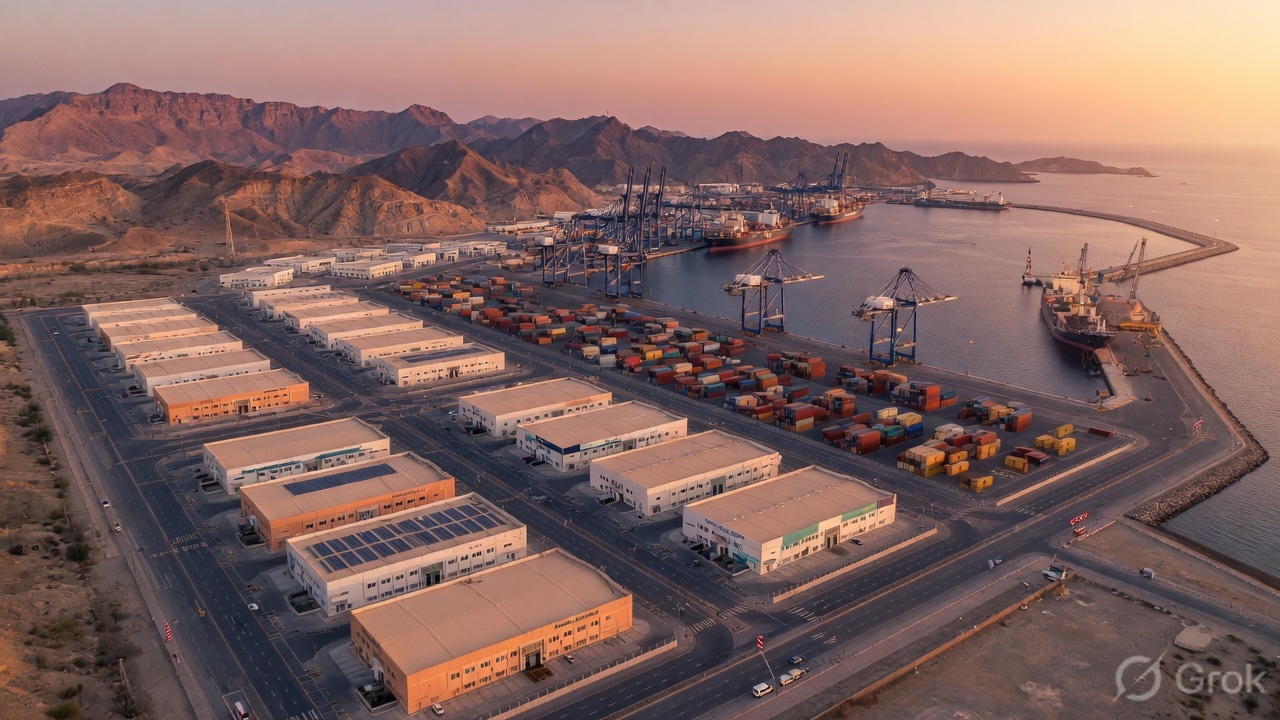
Introduction
In an era defined by global economic transformation, international investors and multinational corporations are continuously evaluating strategic hubs to establish regional and global operations. Across the globe, economic free zones have emerged as the premier mechanism for attracting foreign direct investment (FDI), driving industrialization, and enhancing cross-border trade. By removing traditional trade barriers, offering competitive tax incentives, and establishing specialized industrial clusters, free zones provide businesses with the stability, cost efficiency, and connectivity required to scale efficiently.
Establishing a regional operating hub allows businesses to optimize global supply chains, access emerging consumer markets, and mitigate geopolitically driven logistics bottlenecks. In the Middle East, the Sultanate of Oman has positioned itself as a critical player in international trade. Situated strategically along the Arabian Sea and the Indian Ocean—outside the volatile Strait of Hormuz—Oman offers direct, unobstructed maritime access to the GCC, East Africa, Central Asia, and the Indian subcontinent.
At the heart of Oman’s economic architecture is Oman Vision 2040, a comprehensive national framework aimed at diversifying the national economy away from oil dependency. Oman's specialized free zones and special economic zones act as the primary engine for this diversification, encouraging private sector participation and fostering high-growth export industries.
This comprehensive 2026 guide is designed for foreign investors, corporate decision-makers, global exporters, logistics operators, and high-net-worth individuals seeking to navigate Oman’s free zone landscape. It provides an in-depth, comparative analysis of Oman's major free zones, detailing their unique strengths, regulatory frameworks, industry advantages, and strategic suitability.
What Is a Free Zone?
A free zone—often referred to as a free trade zone or special economic zone—is a geographically defined area within a country’s borders where businesses operate under distinct commercial, tax, and regulatory rules compared to the rest of the nation (referred to as the "mainland").
Core Purpose & Strategic Intent
The primary purpose of a free zone is to eliminate operational friction for foreign enterprises, encourage export-oriented manufacturing, streamline import-export activities, and stimulate job creation and technological transfer within the host country.
Key Differences: Free Zone vs. Mainland
Understanding the operational distinction between free zone entities and mainland companies is critical for corporate setup:
Foreign Ownership: Free zones allow 100% foreign ownership without requiring a local partner or sponsor. Modern mainland regulations in Oman also permit 100% foreign ownership in most sectors, but free zones provide standardized international business structures.
Taxation and Customs: Free zone companies enjoy multi-year corporate tax holidays (up to 30 years) and 0% customs duties on goods imported into the zone or re-exported internationally. Mainland entities are subject to the standard Omani corporate tax rate (15%) and applicable import tariffs.
Market Access: Free zone entities are primary vehicles for international trade, re-export, and specialized industrial manufacturing. While free zone entities can sell directly into the Omani mainland market, such transactions are treated as imports and are subject to standard customs duties and Omani regulations.
Workforce Rules: Free zones typically feature relaxed Omanisation (local workforce quota) requirements during early operational years compared to standard mainland businesses.
Global Examples and FDI Role
Prominent global examples include the Jebel Ali Free Zone (JAFZA) in the UAE, Shannon Free Zone in Ireland, and the Shenzhen Special Economic Zone in China. Globally, free zones have proven to be the single most effective vehicle for attracting Foreign Direct Investment (FDI) because they mitigate country-level bureaucratic delays and offer plug-and-play industrial ecosystem support.
Why Oman Is Investing Heavily in Free Zones
Oman’s aggressive capital expenditure and policy commitment toward expanding its free zone ecosystem are driven by the national economic roadmap: Oman Vision 2040. Recognizing the finite nature of hydrocarbon reserves, the Omani government has targeted free zones as the core mechanism to foster economic diversification, expand non-oil GDP, and position the Sultanate as a premier global logistics and industrial hub.
Strategic Drivers for Free Zone Expansion
Economic Diversification: Shifting national revenue engines from crude oil production toward advanced manufacturing, clean energy, maritime services, tourism, and global trade logistics.
Capitalizing on Geographic Advantage: Leveraging Oman’s direct coastline on the Arabian Sea to offer international shipping lines routes that bypass regional maritime chokepoints.
Private Sector & Foreign Investment: Attracting global multinational capital by delivering zero-tax environments, long-term usufruct land lease agreements, and capital repatriation guarantees.
Infrastructure Integration: Investing billions in integrating deep-water ports (Sohar, Salalah, and Duqm), dedicated air cargo terminals, modern road corridors, and future rail networks directly into industrial zones.
Overview of Oman's Major Free Zones
Oman has established distinct free zones and special economic zones across its governorates, ensuring that each zone delivers specialized operational infrastructure tailored to specific sector requirements.
Summary Overview Table
| Free Zone | Primary Focus | Best For |
|---|---|---|
| Sohar Freezone | Industrial manufacturing, metals, petrochemicals, food processing, logistics. | Companies targeting GCC & UAE overland trade, heavy manufacturing, and food processing. |
| Salalah Free Zone | Transshipment, global export, pharmaceuticals, chemical processing, and green hydrogen. | International exporters targeting East Africa, South Asia, and global maritime shipping routes. |
| Duqm SEZ (SEZAD) | Mega industrial projects, renewable energy, green hydrogen, ship repair, and heavy logistics. | Energy sector firms, heavy industrial projects, large-scale manufacturing, and maritime operations. |
| Knowledge Oasis Muscat (KOM) | Technology, software development, IT services, digital economy, innovation, and R&D. | Tech startups, software firms, IT consultancies, and digital service providers needing access to Muscat talent. |
| Al Mazunah Free Zone | Land trade, warehousing, re-export, light industry. | Trading and re-export businesses targeting Yemen and East African overland markets. |
Sohar Freezone—Manufacturing & Industrial Investment Hub
Located in Al Batinah North, adjacent to the deep-sea Port of Sohar, Sohar Freezone stands as one of the fastest-growing industrial and logistics hubs in the Middle East. Established to leverage its proximity to the Gulf market and direct highway connections to the UAE and Saudi Arabia, Sohar has developed into a major ecosystem for heavy and light manufacturing, raw material processing, and international distribution.
Strategic Infrastructure & Business Ecosystem
Sohar Freezone is directly linked with Sohar Port, creating a unified port-plus-freezone model that allows seamless movement of raw materials and finished goods. The zone features specialized clusters:
Metals Cluster: Home to major steel, aluminum, and ferroalloy production facilities.
Petrochemicals Cluster: Supporting downstream chemical processing and plastics manufacturing.
Food Zone: Featuring dedicated grain silos, sugar refineries, and food processing plants driving regional food security initiatives.
Logistics & Warehousing: Modern cold storage, bonded warehousing, and container handling yards.
Pros & Considerations: Sohar Freezone
| Key Advantages (Pros) | Operational Considerations |
|---|---|
| Direct proximity to UAE border & seamless GCC road connections. | Higher demand for industrial plots leads to competitive leasing. |
| Integrated Port-Freezone single-window customs clearance. | Strict environmental compliance for heavy industrial activities. |
| Up to 25-year corporate tax exemption and 100% foreign ownership. | Minimum land plot requirements apply for heavy manufacturing. |
| Reduced Omanization requirement (15% for initial years). | Capital requirements must be deposited in corporate bank accounts. |
Salalah Free Zone—Gateway to Global Shipping
Situated in the southern Dhofar Governorate, Salalah Free Zone (SFZ) is positioned on one of the world’s most vital maritime trade lanes. Located adjacent to the Port of Salalah—a top-ranked international container transshipment hub—SFZ offers unmatched transit speeds to the Indian Subcontinent, East Africa, the Red Sea, and the European continent.
Connectivity and Industrial Focus
Salalah Free Zone excels in facilitating rapid, high-volume export and re-export activities. It is particularly tailored for industries requiring fast access to global ocean freight:
Pharmaceuticals & Life Sciences: Specialized cleanrooms and temperature-controlled facilities.
Chemical & Material Processing: Leveraging proximity to local mineral deposits and raw materials.
Green Energy & Hydrogen: Evolving into a major hub for renewable energy derivatives and green ammonia projects.
Cold Storage & Food Logistics: Serving global re-export supply chains into East Africa.
Salalah Free Zone Strategic Comparison
| Feature / Metric | Salalah Free Zone Details |
|---|---|
| Tax Exemption Period | Corporate tax holiday up to 30 years. |
| Customs & Import Duties | 0% customs duties on imports, exports, and re-exports. |
| Geographic Target Markets | East Africa, India, South Asia, Middle East, and Europe. |
| Port Connectivity | Direct access to the world's top-10 transshipment container port. |
| Minimum Capital Requirement | No minimum capital requirement for company setup. |
Duqm Special Economic Zone—The Future Industrial City
Spanning an expansive 2,000 square kilometers along the central Arabian Sea coastline, the Special Economic Zone at Duqm (SEZAD) represents the flagship megaproject of Oman’s diversification strategy. Positioned outside the Strait of Hormuz, Duqm is engineered as a self-contained, greenfield economic metropolis encompassing eight dedicated operational zones.
Mega Projects & Long-Term Investment Outlook
Duqm is specifically designed to accommodate industrial activities operating at a massive scale. Key focal areas include:
Energy & Petrochemicals: Anchored by the Duqm Refinery (OQ8) and extensive crude oil storage facilities at Ras Markaz.
Global Green Hydrogen Hub: Attracting multi-billion-dollar investments in wind, solar, and hydrogen electrolysis projects.
Maritime Infrastructure: Featuring a world-class dry dock for ship repair and maintenance capable of servicing Very Large Crude Carriers (VLCCs).
Fisheries Industrial Zone: The largest fishing port and seafood processing ecosystem in the Sultanate.
Investors in Duqm benefit from up to 30-year corporate tax exemptions, highly competitive usufruct land lease rates, and custom regulatory frameworks administered directly by SEZAD.
Which Free Zone Is Best for Different Types of Investors?
Selecting the optimal free zone requires aligning corporate activities with the specific infrastructure, geographic location, and commercial ecosystem of each zone.
Strategic Investor Matching Matrix
| Investor Type | Recommended Free Zone | Primary Operational Reason |
|---|---|---|
| Heavy Manufacturers & Metals | Sohar Freezone | Direct access to primary metal producers, heavy industrial power grid, and GCC road linkages. |
| Logistics & Warehousing | Sohar or Salalah | Integrated container ports, bonded warehousing, and multi-modal transport networks. |
| Global Re-Exporters | Salalah Free Zone | Strategic access to ocean transshipment lanes connecting Asia, Africa, and Europe. |
| Technology & Software Firms | Knowledge Oasis Muscat | Capital city location, proximity to government buyers, and access to Omani tech talent. |
| Megaproject & Energy Investors | Duqm SEZ (SEZAD) | Vast land availability, dry dock facilities, and dedicated renewable hydrogen infrastructure. |
| Yemen & East Africa Traders | Al Mazunah Free Zone | Direct overland border gateway with specialized customs procedures. |
| HNWIs & Family Offices | Sohar / Salalah / Duqm | Facilitates structured capital allocation tied to Oman Golden Visa eligibility. |
| SMEs & Light Industrial | Sohar / Salalah | Low upfront capital barriers, pre-built warehouse units, and fast digital setup via Invest Easy. |
Industries Growing Inside Oman's Free Zones
Driven by government diversification initiatives under Vision 2040, several high-growth industrial sectors are rapidly expanding across Omani free zones.
High-Growth Sectors in Detail
Manufacturing & Automotive: Assembly, spare parts distribution, and industrial fabrications concentrated in Sohar.
Food Processing & Security: Agribusiness, grain milling, and cold-chain storage facilities supported by Sohar and Salalah Port infrastructure.
Pharmaceuticals & Healthcare: Specialized manufacturing of generic medicine, medical consumables, and personal care products in Salalah.
Renewable Energy & Green Hydrogen: Solar component manufacturing, wind equipment storage, and hydrogen electrolysis infrastructure centered in Duqm and Salalah.
Technology & Digital Services: Software development, AI research, cloud hosting, and fintech operations operating within Knowledge Oasis Muscat.
Key Factors to Consider Before Choosing a Free Zone
Before committing capital and signing long-term land or office lease agreements, international investors must evaluate critical operational metrics:
Target Market Proximity: Determine whether your market is regional (GCC overland via Sohar) or global/maritime (East Africa, Asia via Salalah or Duqm).
Supply Chain & Raw Material Access: Evaluate proximity to inputs, such as raw metals, bulk chemicals, or agricultural imports.
Utility & Infrastructure Demand: Ensure the free zone provides sufficient electrical load, industrial water supply, effluent treatment, and natural gas infrastructure required for heavy industrial processes.
Workforce Availability & Talent: Consider the costs associated with relocating management talent versus recruiting local technical labor.
Total Cost of Operations: Assess setup licensing costs, annual usufruct land lease rates, warehouse rents, visa fees, and municipal utility tariffs.
Long-Term Expansion Potential: Verify that the zone offers adjacent physical expansion plots to support future business scaling without relocation.
Step-by-Step Checklist for Selecting the Right Free Zone
Executing a structured decision-making process ensures seamless incorporation and avoids costly relocation errors:
Define Core Business Objectives: Determine whether the entity will function as an export manufacturing plant, regional distribution warehouse, or digital service headquarters.
Map Out Industry Ecosystems: Identify which free zone contains suppliers, raw material producers, and complementary business partners.
Evaluate Port and Transport Infrastructure: Assess whether ocean container shipping, air freight, or heavy truck transport is primary to your supply chain.
Review Regulatory Incentives & Guarantees: Compare tax exemption terms (25 vs 30 years), Omanization quotas, and minimum share capital rules.
Calculate Total Capital Expenditure (CAPEX) & Operating Costs: Obtain itemized quotes for usufruct lease agreements, facility construction, licensing, and utility connections.
Verify Digital & Banking Clearance: Confirm that chosen business activities align with Omani commercial law and qualify for streamlined corporate bank account opening via the Invest Easy national portal.
Inspect Physical Sites & Real Estate: Conduct site visits to evaluate physical land topography, utility connectivity, and warehouse quality.
Engage Professional Strategy Advisors: Consult corporate structure specialists to execute incorporation, licensing, and visa processing.
Oman Free Zones vs UAE Free Zones vs Saudi Economic Cities
When evaluating regional corporate setup in the Middle East, investors frequently compare Oman's free zones with established UAE free zones and developing Special Economic Zones (SEZs) in Saudi Arabia.
Balanced Regional Comparison
| Feature / Criteria | Oman Free Zones | UAE Free Zones | Saudi Economic Cities (SEZs) |
|---|---|---|---|
| Strategic Advantage | Direct ocean access outside the Strait of Hormuz; lower operating costs. | Established global commercial hub; extensive air/sea connectivity. | Direct access to the largest domestic consumer market in the GCC. |
| Foreign Ownership | 100% full foreign ownership guaranteed. | 100% full foreign ownership guaranteed. | 100% full foreign ownership allowed in designated zones. |
| Corporate Tax Exemption | Multi-year holidays (25 to 30 years). | 0% for qualifying free zone entities (subject to domestic rules). | Multi-year corporate tax incentives on qualifying activities. |
| Industrial Land Rents | Highly competitive, long-term usufruct rates. | Higher average land and warehouse leasing rates. | Competitive incentives for high-priority industrial sectors. |
| Local Market Access | Direct access to the Omani mainland via standard customs clearance. | Sales to the mainland are subject to 5% customs duties and local agent rules. | Primary focus on domestic Saudi industrial supply chain integration. |
| Workforce Quotas | Reduced initial Omanization rates (15% - 25%). | Variable Emiratisation rules across zones. | Saudization quotas apply based on designated activity sectors. |
Rather than declaring a single regional winner, global investors typically utilize UAE free zones for regional sales offices, Saudi SEZs for domestic Saudi market penetration, and Oman free zones for large-scale export manufacturing, heavy industrial processing, and unhindered ocean logistics.
How Free Zones Complement Oman Golden Visa Planning
Oman’s Investor Residency Program (Golden Visa) offers long-term, renewable 5-year and 10-year residency permits to foreign investors and entrepreneurs. Establishing a business within an Omani free zone can fit within a foreign investor’s broader residency strategy:
Strategic Integration: Capital invested into establishing an operational free zone enterprise—such as purchasing industrial real estate or funding company equity—can form part of an investor’s economic profile when applying for long-term residency.
Verification of Criteria: Investors must check eligibility criteria, as holding a free zone commercial registration does not automatically grant a Golden Visa; specific capital threshold investments or real estate ownership metrics must be met.
Family Relocation & Regional Headquarters: Long-term residency allows foreign executives and business owners to sponsor family members, establish permanent residence in Oman, and oversee long-term business expansion across the Middle East.
Common Mistakes Investors Make When Choosing a Free Zone
Selecting Solely Based on Initial Setup Cost: Choosing the lowest upfront licensing fee rather than evaluating long-term logistics, shipping, and utility costs.
Ignoring Logistics & Freight Corridors: Establishing an export manufacturing plant in a zone far removed from primary shipping routes, resulting in high overland trucking expenses.
Mismatching Business Activity and Sector Ecosystem: Placing a technology firm in a heavy industrial zone or a chemical manufacturer in a light trading park.
Underestimating Operational & Utility Needs: Failing to verify that required electrical grid capacities or gas lines are installed at the leased plot prior to signing usufruct agreements.
Neglecting Local Market Customs Regulations: Assuming free zone goods can move into the Omani mainland market without customs duties or product registration clearance.
Skipping Banking and Compliance Reviews: Initiating company formation without ensuring corporate ownership structures comply with Omani banking Know-Your-Customer (KYC) requirements.
Illustrative Investor Scenarios
(Note: The following scenarios are illustrative business models designed to demonstrate operational decision-making.)
Scenario 1: Auto Parts Manufacturer Selecting Sohar
An automotive component manufacturer based in Europe needs to establish a regional production facility to supply assembly plants in the UAE and Saudi Arabia. They select Sohar Freezone due to its proximity to Sohar Port, direct highway connections across the border, and access to primary metals within the Sohar industrial cluster.
Scenario 2: Global Exporter Choosing Salalah
An international agricultural trading company specializing in sesame seeds and spices targets expansion into East Africa and South Asia. They establish operations in Salalah Free Zone to utilize transshipment schedules at Salalah Port, saving up to four days in shipping transit time compared to Gulf-internal ports.
Scenario 3: Heavy Industrial Energy Investor Evaluating Duqm
A green energy consortium planning a multi-gigawatt green ammonia export plant selects Duqm SEZ (SEZAD). Duqm offers vast, unconstrained coastal land plots, dedicated deep-water port facilities for chemical tankers, and long-term usufruct terms required for megaproject financing.
Scenario 4: Tech Company Assessing Innovation Zones
An artificial intelligence and software consultancy serving enterprise clients across Muscat selects Knowledge Oasis Muscat (KOM). KOM provides ready-to-use office infrastructure, proximity to top Omani university graduates, and direct access to government agency clients located in the capital.
Frequently Asked Questions
Related Resources
- Oman Golden Visa Guide
- Business Opportunities in Oman
- Logistics Investors Guide
- Manufacturing Investors Roadmap
- Corporate Due Diligence Guide
- Oman Banking & Setup Guide
- Oman Vision 2040 Economic Overview
- CEPA Trade Agreements Summary
- Entrepreneurs Setup Guide
- Foreign Property Ownership Guide
How Migrate World Can Help Investors Choose the Right Free Zone
Navigating foreign investment frameworks, selecting the appropriate free zone, and securing regulatory approvals require strategic advisory support. Migrate World provides comprehensive consulting services tailored to international investors, corporate entities, and high-net-worth entrepreneurs looking to establish a footprint in Oman.
Our services include:
Strategic Business & Feasibility Advisory: Analyzing your commercial goals to match your operations with the most cost-effective free zone.
Entity Structuring & Licensing: Managing corporate registration, name reservations, activity approvals, and licensing through the digital Invest Easy portal.
Real Estate & Usufruct Support: Negotiating usufruct agreements for land plots, office spaces, and pre-built warehouses.
Residency & Investor Visa Planning: Aligning free zone corporate formation with long-term 5-year or 10-year Golden Visa residency programs for business owners and executives.
Legal & Corporate Coordination: Coordinating with Omani legal, tax, and banking institutions to ensure streamlined corporate bank account opening and full compliance with updated regulations.
Schedule an Advisory Consultation
Book a consultation with Migrate World to evaluate which Oman Free Zone best aligns with your investment goals, industry requirements, and long-term business strategy.
Conclusion
Oman Free Zones play a pivotal role in the Sultanate's long-term economic diversification strategy under Vision 2040. By offering 100% foreign ownership, multi-year corporate tax exemptions, zero customs tariffs, and world-class port infrastructure, Oman provides international businesses with an appealing platform for regional and global expansion.
Each free zone in Oman serves distinct industrial functions: Sohar excels in heavy manufacturing and GCC-directed logistics, Salalah provides high-speed global shipping and transshipment connectivity, Duqm offers unmatched scale for mega energy and heavy industrial developments, and Knowledge Oasis Muscat drives the technology and digital economy.
Selecting the right free zone requires an evaluation of your target markets, operational infrastructure requirements, supply chain routes, and setup budgets. With proper due diligence and professional guidance, foreign investors can establish a secure, tax-efficient, and highly scalable operational base in Oman.
Need Help Choosing the Right Oman Free Zone?
Migrate World can help you compare free zone options, align them with your business model, and connect the right setup pathway with Oman Golden Visa eligibility where relevant.
Get a Free Consultation